
Dan Smith, Seibukan Shorin Ryu
Introduction
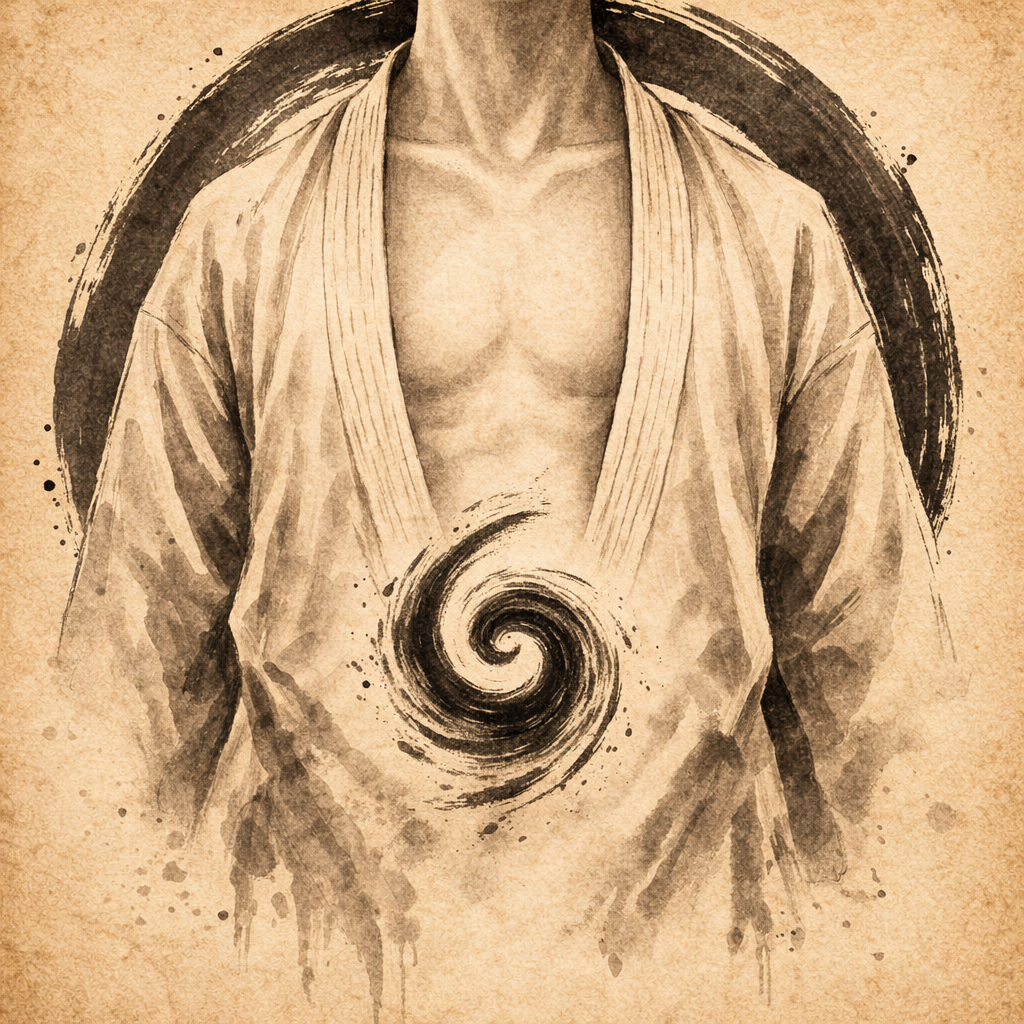
Chiimigukuru refers to embodied wisdom — the body’s capacity to understand, judge, and respond appropriately through lived experience. It is not memorization or conscious decision‑making, but understanding that resides within the body itself.
In Okinawan martial culture, knowledge is not considered complete until it is absorbed physically. Technique may be explained verbally, but true understanding appears when the body itself can perceive conditions and respond correctly without conscious deliberation.
Language Components
Chiimigukuru is an Uchināguchi term composed of two elements.
Chiimi — wisdom, discernment, experiential understanding.
Gukuru — body or physical being.
Together, the term describes wisdom that cannot be separated from bodily experience. Understanding is not stored intellectually but expressed through posture, movement, pressure, and timing.
The related Okinawan word chim refers to heart or spirit. In Okinawan culture the heart and body are not separated from wisdom. Therefore chiimigukuru may also be understood as wisdom of the heart embodied in the body.
Comparison with Karada de Oboeru
Karada de oboeru means “to learn or remember with the body.” The phrase refers to procedural learning developed through repetition and habit.
Karada de oboeru emphasizes reproducibility and consistency. A movement is repeated until it can be reliably reproduced.
Chiimigukuru emphasizes adaptability and situational understanding. Instead of recalling a stored technique, the practitioner perceives conditions and responds appropriately.
In self‑defense situations memorized responses often fail when distance, timing, or force changes. Embodied wisdom allows instant adaptation under uncertain conditions.
Structural Foundations of Chiimigukuru
Embodied wisdom develops when the body is structurally organized so that perception can occur through contact and movement.
Several internal principles form the physical foundation:
Tanden — the functional center of coordination and breath in the lower abdomen.
Gamaku — pelvic compression and control that organizes movement through the hips and waist.
Muchimi — connected softness that maintains tactile contact with an opponent.
Chinkuchi — momentary structural consolidation and release that produces decisive power.
When these elements function together the practitioner does not consciously select techniques. The body recognizes pressure, direction, and imbalance and responds accordingly.
Muchimi: The Physical Expression of Chiimigukuru
Muchimi is often described as “sticky body” or “connected softness.” It allows a practitioner to maintain contact with an opponent without stiffness or collision.
Through muchimi the body remains relaxed yet connected. Pressure can be felt and absorbed while maintaining structure through tanden and gamaku. Because the body is not rigid, incoming force can be redirected rather than resisted.
Muchimi therefore becomes the physical method through which chiimigukuru is expressed. When contact is maintained through soft structural connection, the practitioner can feel changes in pressure, balance, and intention. The body then responds naturally without relying on memorized techniques.
Without muchimi, contact becomes collision. With muchimi, contact becomes information.
Karate Is Born From Contact
A traditional Okinawan concept often expressed by senior instructors is that karate develops through contact.
Karate is born from contact, but it avoids collision so that pressure can be absorbed and redirected. Direct collision produces stiffness and loss of sensitivity. Contact, by contrast, allows the practitioner to feel the opponent’s direction, balance, and force.
When contact is maintained without rigidity, the body can absorb incoming force, adjust structure, and redirect pressure. This process allows the practitioner to remain stable while disturbing the balance of the attacker.
This principle explains why tactile training, controlled partner drills, and receiving exercises are essential for developing chiimigukuru. Without contact the body cannot learn to perceive and adapt.
Training Progression for Developing Chiimigukuru
1. Structural Preparation
Posture, stance, breathing, and joint release organize the body so sensitivity can develop.
2. Sensory Conditioning
Light contact training develops tactile awareness and the ability to feel pressure, direction, and balance.
3. Receiving Drills
Students learn to soften, yield, and maintain contact without selecting a predetermined technique.
4. Variable Pressure Training
Distance, timing, and force are gradually changed so that adaptation becomes necessary.
5. Kata as Conditioning
Kata becomes a method of conditioning internal states rather than simply reproducing choreography.
6. Instructor Role
The instructor creates conditions that allow discovery while limiting excessive explanation.
Why Okinawan Teachers Often Explain Less
Traditional Okinawan instructors frequently provide limited verbal explanation during training. This approach reflects an understanding of how embodied knowledge develops into wisdom.
Verbal instruction can guide the direction of practice, but chiimigukuru cannot be transmitted through words. It must arise through physical experience. When too much explanation is given, students often attempt to reproduce descriptions rather than develop perception through the body.
By allowing students to experience pressure, balance changes, and structural organization directly, instructors encourage discovery through sensation. Over time the practitioner begins to feel correct structure, timing, and connection without needing conscious instruction.
What is discovered physically tends to remain stable and adaptable under pressure. Obtaining wisdom through the body not mentally (rehearsed).
Reproduction vs Conditioning
Reproduction (karada de oboeru) stores motor patterns for recall.
Conditioning (chiimigukuru) alters perception and readiness.
Reproduction prepares the body to repeat known solutions.
Conditioning prepares the body to respond to unknown problems.
Reproduction comes from scenarios and conditioning comes from kata repetitions.
Diagnostic Drill: Variable Entry Receiving Test
Purpose: Identify whether a student is reproducing technique or responding with embodied understanding.
Indicators of reproduction
• Immediate blocking motion
• Preset stance selection
• Early muscular tension
Indicators of conditioning
• Softening upon contact
• Maintaining tactile connection
• Adaptive response based on pressure and balance
Case Study: First Movement of Seisan
The first movement of Seisan kata illustrates the difference between reproduction and embodied understanding.
In Seibukan Shorin Ryu the opening movement is a middle‑level outside forearm receiving/block (chudan soto uke). Some Japanese descriptions refer to this motion as chudan uchi uke, but in Okinawan usage the action emphasizes receiving and controlling with the outside of the forearm.
Reproductive interpretation
The movement is treated as a block followed by a counterstrike. This response functions only when the attack occurs at the expected distance and timing.
Conditioned interpretation
The practitioner receives the incoming force with the forearm while adjusting body structure. The movement redirects pressure, stabilizes balance, and creates the opportunity to strike once structural advantage is achieved. The counter attack preferably is a continuous movement with the receiving arm/fist or Uke Kokegi /receive and attack. The target could be wherever the opening exist.
The kata remains unchanged. The training intention determines the outcome.
Modern Perspective
Modern neuroscience describes similar processes through embodied cognition and sensorimotor adaptation. The nervous system learns to respond to changing conditions through perception and movement rather than conscious calculation.
This perspective supports the traditional Okinawan approach in which repeated physical experience gradually transforms the body’s ability to perceive and respond.
Proprioception is your body’s ability to sense where your limbs and body are in space without looking, often called your “sixth sense” of movement. In close combat, this skill becomes critically important.
Summary
Karada de oboeru or your body develops the wisdom and ability to reproduce correct movement under known conditions. No one can tell the future. The ability to respond immediately to any change in the combat environment occurs best through chiimigukuru.
Chiimigukuru through well developed kata cultivates the ability to respond correctly under unknown conditions and responses.
Reproduction stores solutions. Conditioning alters perception and proprioception.



Leave a Reply